Furnace installation and replacement
Furnace installation and replacement in Fort Collins
A new furnace is something you live with for many winters. This page walks through what goes into one in Fort Collins, from the load calculation to the final inspection, so the talk with a contractor starts on solid ground.
When replacement comes up
The conversation usually starts in one of a few ways. The old furnace dies in a cold spell and the part it needs is hard to get. A technician finds a crack or heavy corrosion in the heat exchanger. Or the owner wants a quieter, more efficient system before the old one gives out on its own schedule.
If someone tags your heat exchanger, ask to see what they found: a photo, a camera inspection, or a combustion reading taken with the burners running. A second opinion on that finding is reasonable.
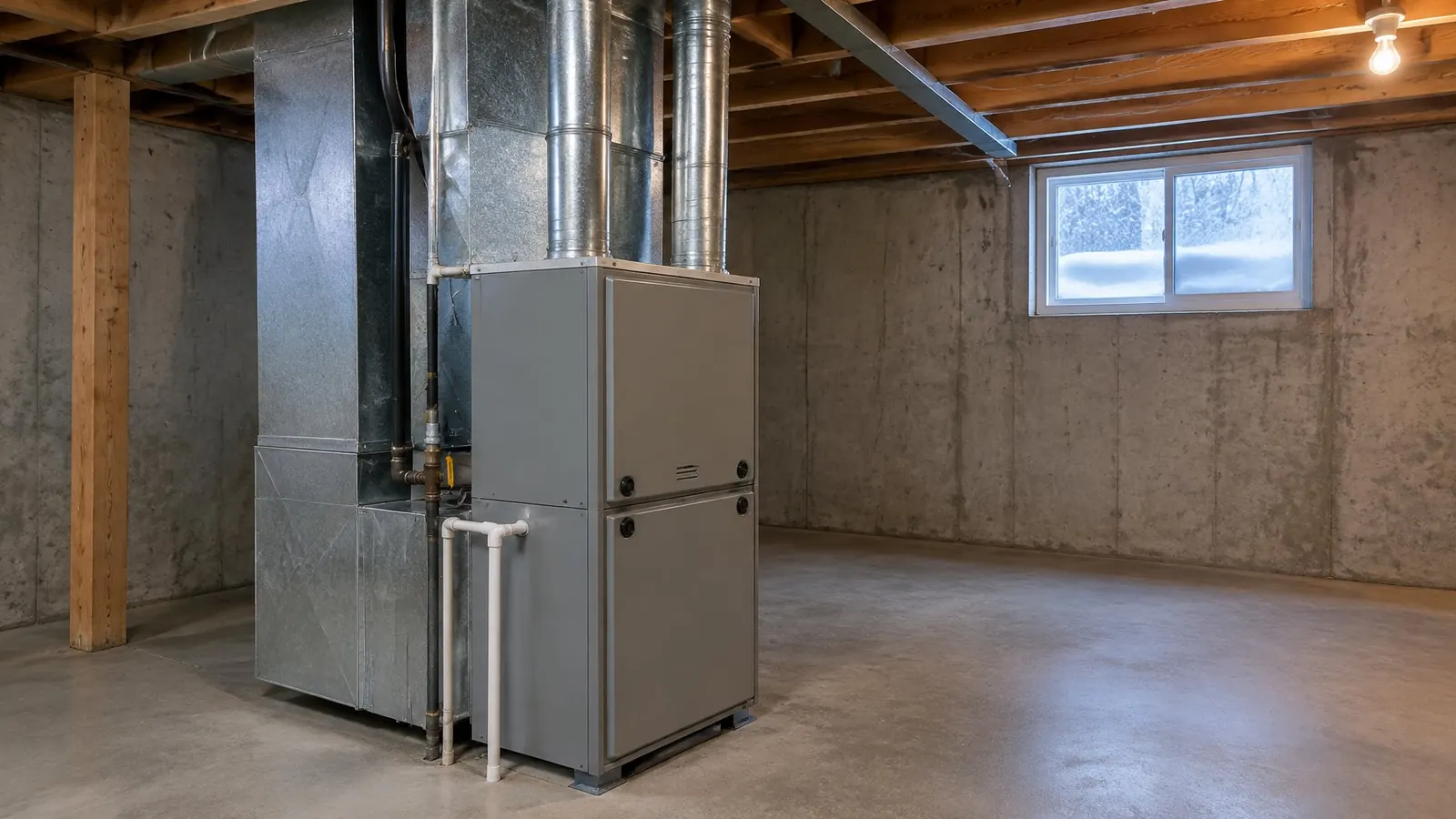
Size comes from the house, not the old label
The furnace that came with the house may be bigger than the house needs. Insulation, windows and air sealing change over decades, and an oversized furnace short-cycles: it heats fast, shuts off, and leaves far rooms cool.
A proper sizing starts with a room-by-room heat loss figure, often called a Manual J calculation. Fort Collins' own heat pump guidance tells homeowners that an HVAC professional should run one before choosing equipment. Ask for the same on a furnace quote.
Efficiency and venting
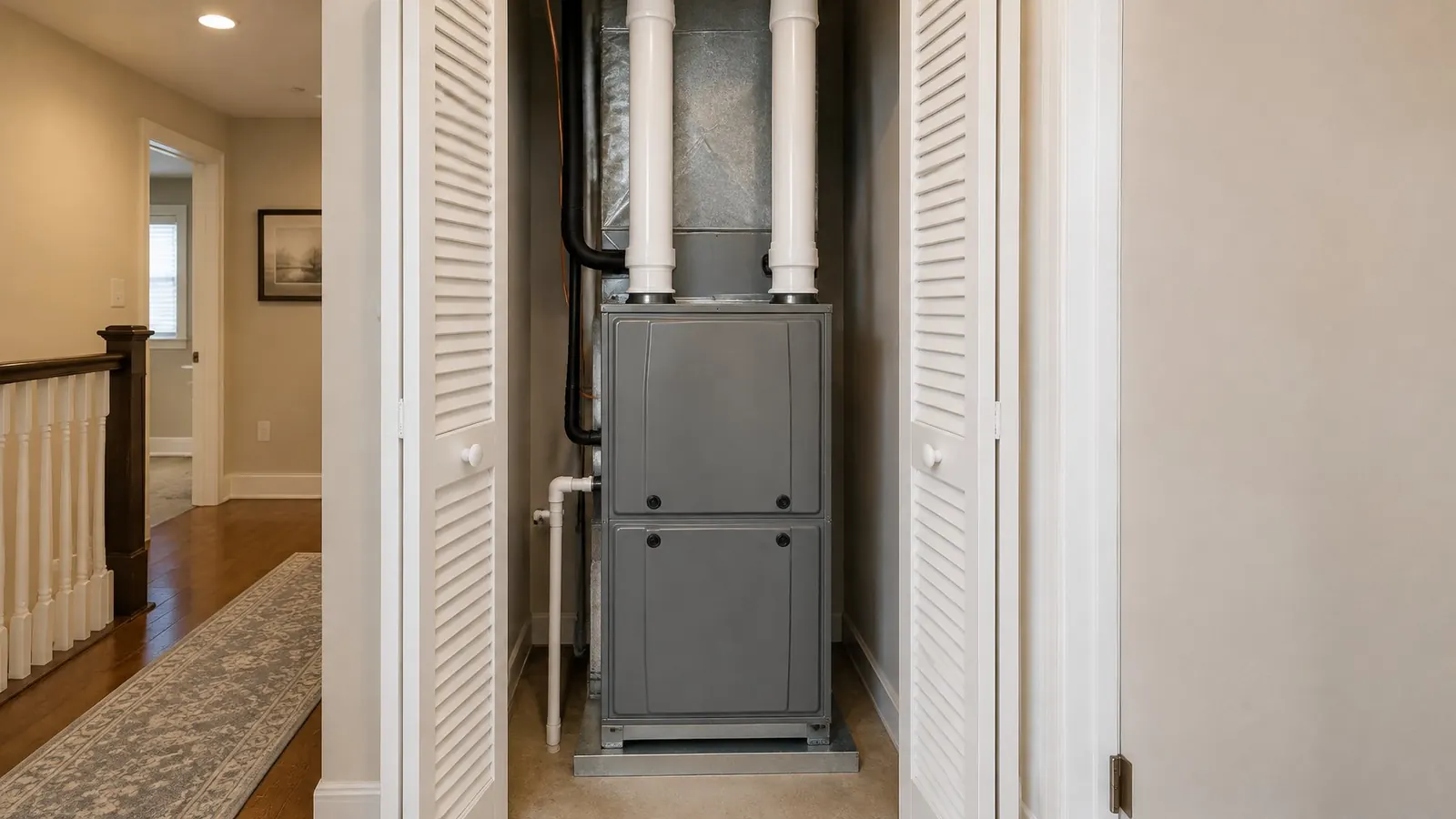
Furnaces carry an AFUE rating, the share of the fuel's heat that ends up in the house over a season. Standard furnaces send hot exhaust up a metal flue, which is sometimes shared with another gas appliance. Condensing furnaces pull so much heat out of the exhaust that it leaves cool and damp through plastic pipe, and they make water that needs a drain.
Switching from one type to the other changes the venting. A condensing furnace needs a new pipe route through a wall or the roof, plus somewhere for condensate to go. If the old furnace shared a chimney, whatever is left on that chimney may need its venting rechecked once the furnace stops using it. These details separate a careful quote from a quick swap.
Permits and inspections inside city limits
Replacing a furnace in Fort Collins takes a permit. The City's building permit page puts furnaces, air conditioners, heat pumps and air handlers on its heating or cooling permit application, and a new gas line for a heater goes in under a mechanical permit. Applications go to Building Services by email.
Permits submitted on or after April 1, 2026 are reviewed under the 2024 International Codes with the City's local amendments.
The contractor normally pulls the permit, and inside the city that company needs a City HVAC license. The City issues one class for new residential installations and another for repair and replacement work, so ask which class the company holds.
Sources: City of Fort Collins building permits; Building Services; contractor licensing.
Colorado's carbon monoxide alarm rule
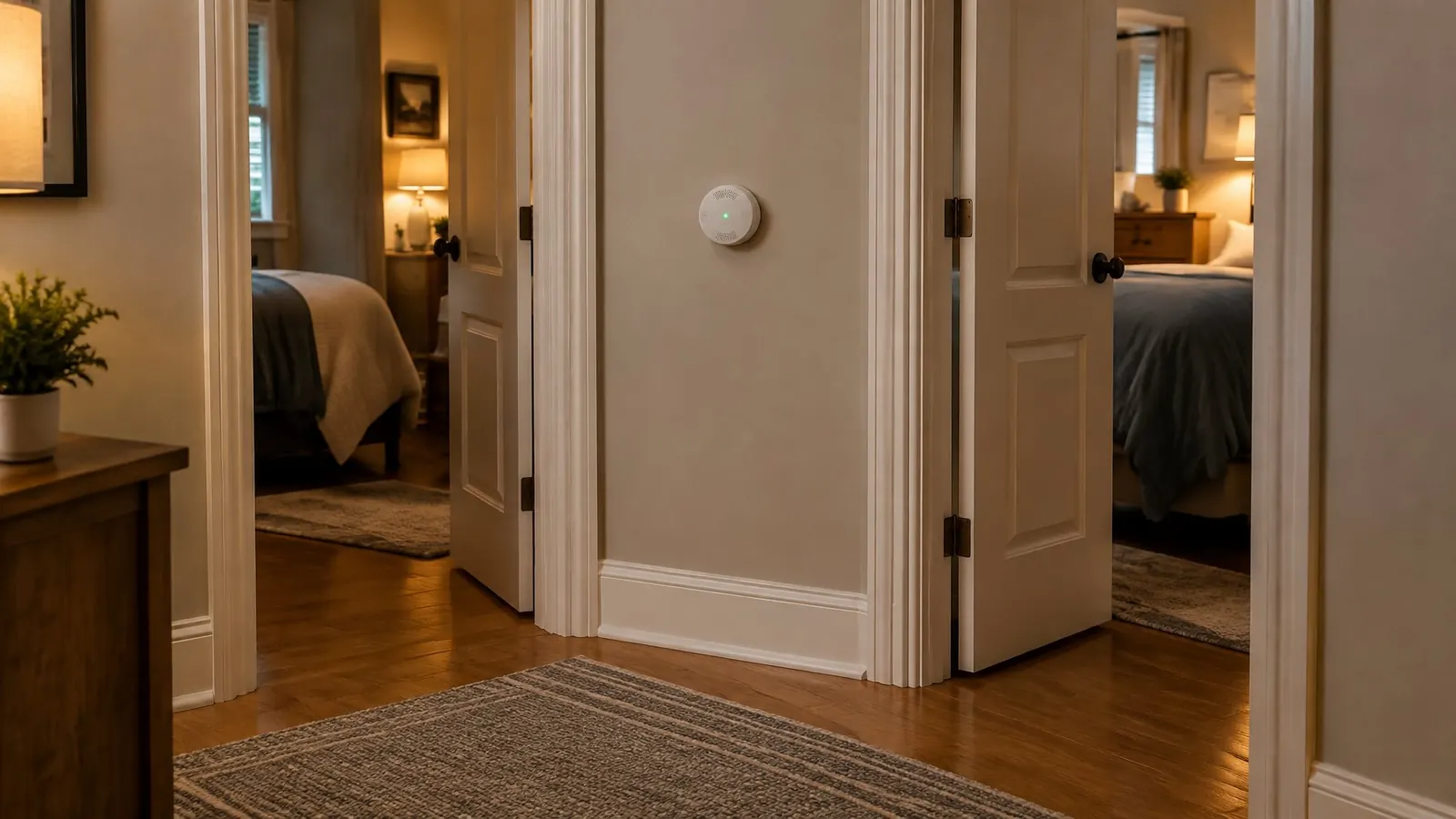
Colorado links CO alarms to permits. Under C.R.S. 38-45-102, a permitted swap of gas-burning equipment in a house that has such equipment or a built-in garage means a working alarm must go up within fifteen feet of each bedroom doorway, or wherever the building code says.
A furnace swap in Fort Collins goes through a permit, so the rule applies. Walk the bedroom hallways before the inspection and make sure an alarm is in place and working near each one.
Source: C.R.S. 38-45-102.
Rebates and financing worth asking about
Fort Collins Utilities runs its efficiency programs through Efficiency Works, which serves Platte River Power Authority and the cities that own it. The City's electrification page says rebates are available through Efficiency Works, and that a participating provider has to do the work for local rebates to apply. The same page mentions Epic Loans, an on-bill financing option, and energy advising through Epic Homes.
Those programs lean toward heat pumps and efficiency upgrades rather than plain furnace swaps. Before signing, ask whether the company is a participating provider and whether your project qualifies.
Sources: City of Fort Collins home electrification; Efficiency Works.
What a careful written quote spells out
- Make, model and AFUE rating of the new furnace.
- The heat loss figure behind the size, or why none was done.
- Vent changes, the condensate drain and any new gas piping.
- Whether the permit and inspection are part of the price.
- Return air, filter cabinet and any duct changes.
- Hauling away the old unit.
- Labor and parts warranty terms, in writing.
Comparing two quotes is far easier when both list the same items. Ask for any missing line before deciding.
Pairing with central air
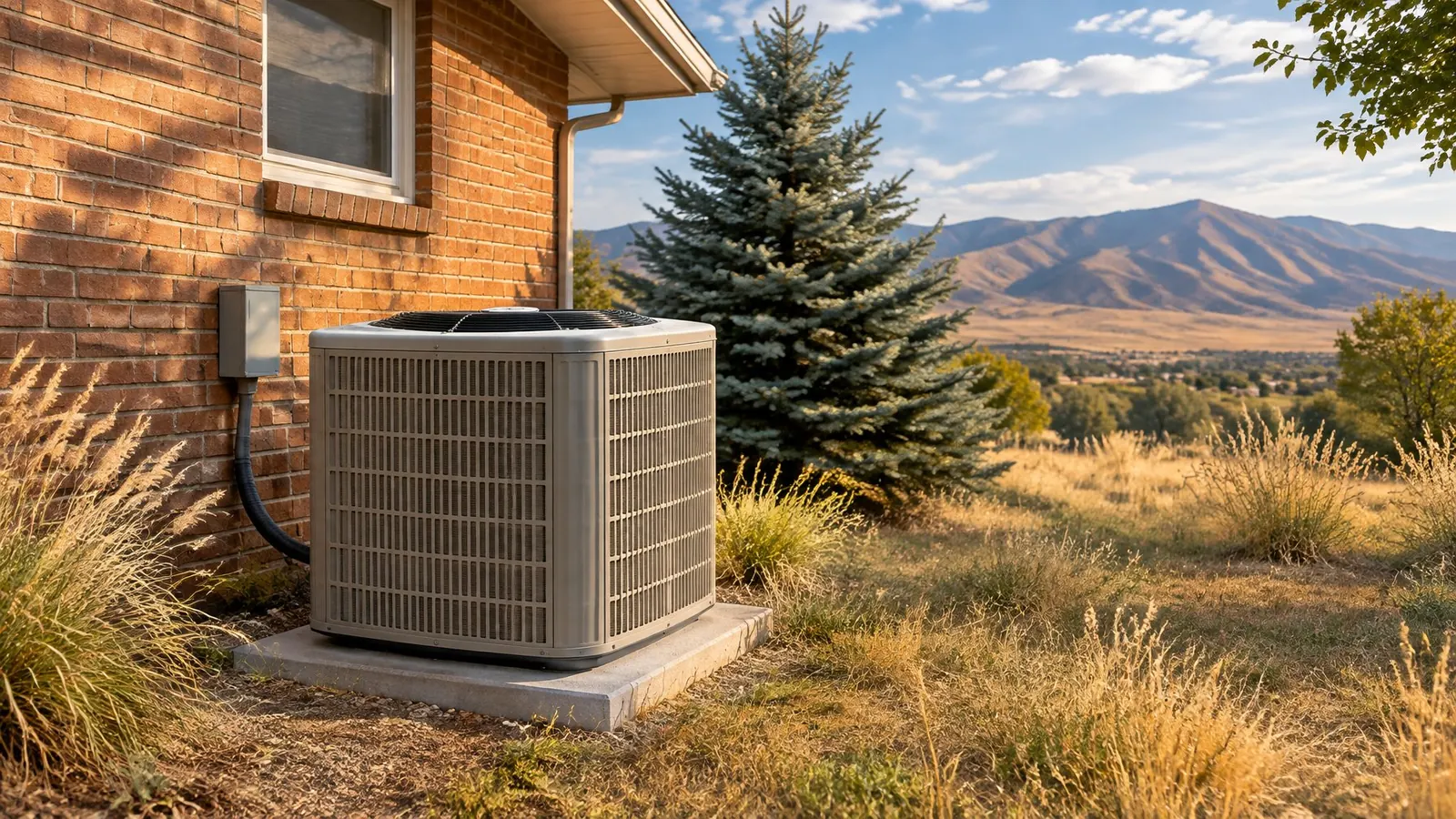
In a house with central air, the indoor cooling coil sits on top of the furnace and both use its blower. A new furnace can often keep a coil that is in good shape, but airflow has to suit both. If the air conditioner is near the end of its life as well, doing both together means one permit and one round of duct changes. See AC installation and replacement.
Replacement questions
How long does the work take?
A straight swap is a much smaller job than one that changes venting or adds equipment. Ask the contractor how many days to expect and when the City inspection gets booked.
Can the old thermostat stay?
Often, for a basic single-stage furnace. Two-stage and variable-speed furnaces, and heat pumps, need a thermostat that can drive them. Settle it before install day.
Is a permit needed when a contractor does the work?
Yes, inside Fort Collins city limits. Furnace replacements are not on the City's list of exempt work.
Who checks the finished job?
A City building inspector, once the work is complete. Keep the permit paperwork until the inspection passes.
Cold house? Make the call.
Describe the symptoms and give your street. A heating and cooling business that covers the Fort Collins area, independent of this website, handles everything after that.