Air conditioning repair
Central AC repair in Fort Collins
Summer afternoons on the Front Range get warm enough that a dead air conditioner is hard to ignore. Call about central air as readily as about heat.
Before calling
- Thermostat on Cool, fan on Auto, setpoint below room temperature.
- Both breakers on: the outdoor unit has its own, and the furnace blower moves the cooled air.
- A clean filter at the return.
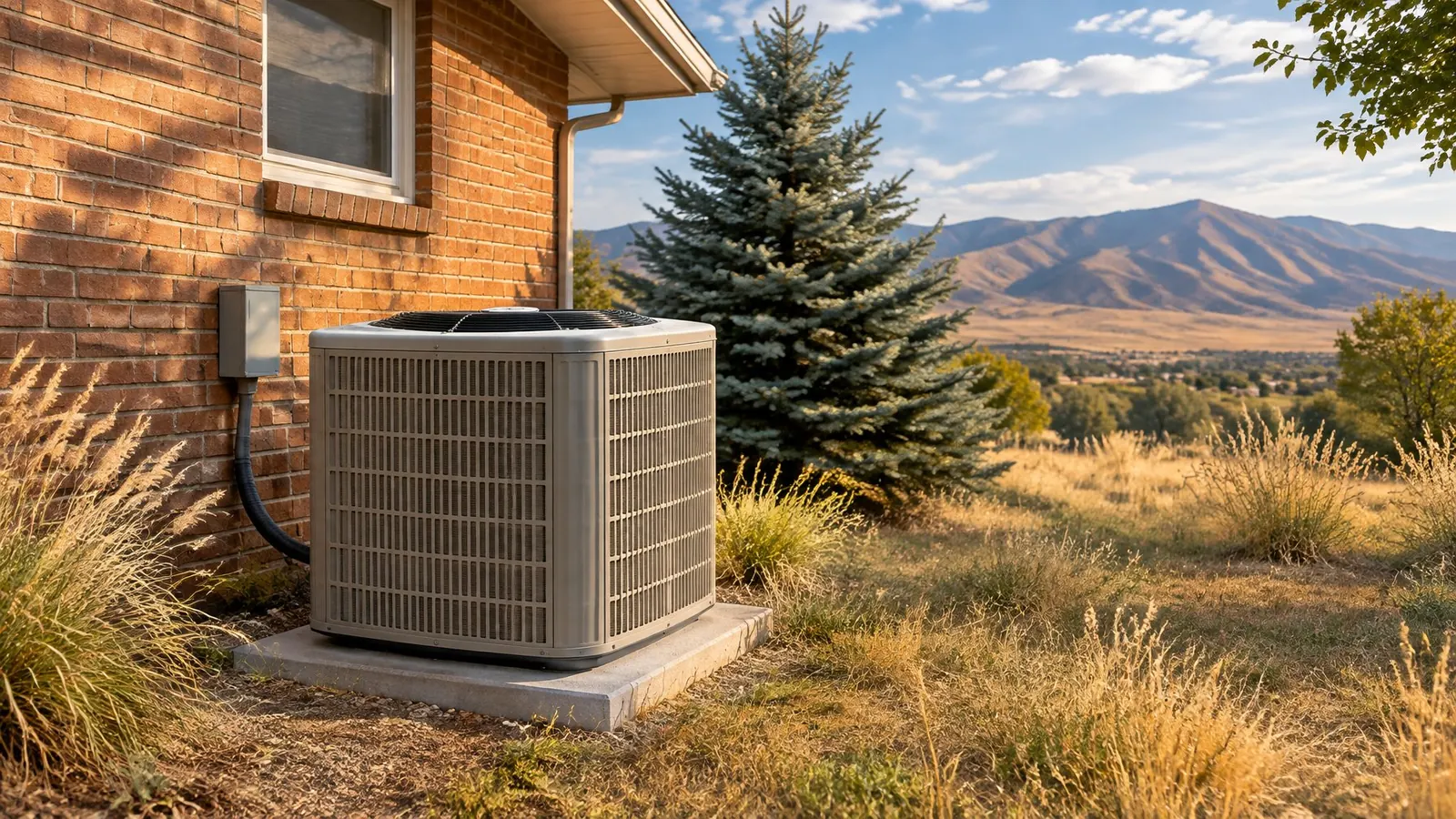
- The outdoor unit clear of grass clippings, seed fluff and leaves.
- Ice on the larger copper line? Turn cooling off, run the fan alone, and let it thaw before anyone works on it.
What technicians find
A failed run capacitor is common: the outdoor fan or compressor hums but will not start. A pitted contactor can leave the unit dead even with the thermostat calling.
Low refrigerant means a leak somewhere. Adding refrigerant without finding the leak buys a few weeks, not a season.
Restricted airflow, from a dirty filter or a matted indoor coil, lets the coil freeze into a block of ice. A clogged condensate drain can trip a float switch and stop cooling entirely.
Older systems and R-22
Many older air conditioners run on R-22. The EPA's homeowner notice explains that US production and import of R-22 ended on January 1, 2020, that owners may keep using existing systems, and that only recovered or reclaimed supply remains for servicing. A repair that needs a large recharge is where many owners start pricing a replacement.
Source: EPA homeowner fact sheet on the HCFC-22 phaseout (archived copy).
One blower, two systems
Central air and the furnace share the blower, the control board and the filter. A failed blower motor or board can stop cooling in July and heating in January, so mention both seasons when describing the trouble.
Cold house? Make the call.
Describe the symptoms and give your street. A heating and cooling business that covers the Fort Collins area, independent of this website, handles everything after that.